
China’s migrant workforce of 150 million represents the largest movement of people in modern history. But maximising the benefits of internal migration while mitigating its adverse effects is a difficult balancing act. Most migrants leave rural communities at a young age with few skills and can only obtain work that is, at best, manual and menial – and at worst, severely exploitative. This Joint Programme piloted strategies to reach young people most at risk from social exclusion and labour exploitation.
JOINT PROGRAMME QUICK FACTS
Programme Dates 11 Feb 2009 - 11 Feb 2012
Net funded amount $6,510,497
Participating UN agencies ILO, UNDP, UNESCO, UNFPA, UNICEF, UN Women, WHO, UNV, UNIDO
National partners Ministry of Human Resources and Social Security; Ministry of Health, Ministry of Civil Affairs, National Development and Reform Commission, National Population & Family Planning Commission, National Working Committee for Children and Women, State Council Inter-Ministerial Committee on Migrant Workers
Documents


Despite high economic growth, the Philippines, with a fast growing population, is not able to provide sufficient jobs to reduce poverty. Some 1.46 million young people were unemployed in 2010, half of them with secondary school educations and 40 % with college degrees. In the search for decent work, many young Filipinos move from rural to urban areas, with some opting to go overseas. The Joint Programme worked on two fronts: increasing access to decent jobs for young men and women in the country’s poorest areas, and improving policies on youth employment and migration by encouraging the participation of all stakeholders in the process.
JOINT PROGRAMME QUICK FACTS
Programme Dates 30 Jul 2009 - 27 Jan 2013
Net funded amount $5,926,651
Participating UN agencies ILO, IOM, UNICEF, UNFPA
National partners Department of Labor & Employment (DOLE), Technical Education and Skills Development Authority (TESDA), Department of Education (DepEd), National Economic and Development Authority (NEDA), Department of Trade and Industry (DTI), Department of Social Welfare and Development (DSWD), National Youth Commission (NYC), Philippine Commission on Women (PCW), Autonomous Region in Muslim Mindanao (ARMM), Provincial Local Governments of Antique, Masbate, Agusan Del Sur and Maguindanao
Documents


China has the world’s biggest ethnic minority population, and this population is disproportionately poor, including 56% of all Chinese people living in extreme poverty. China owes much of its cultural wealth to the unique diversity of its minority groups, yet these minorities risk becoming increasingly vulnerable without the capacity and opportunities to access the benefits of China’s overall development. The Joint Programme supported China in designing and implementing policies that promote the rights of its 106 million ethnic minority citizens in the five provinces in which they are concentrated: Tibet, Qinghai, Xinjiang, Yunnan and Guizhou.
JOINT PROGRAMME QUICK FACTS
Programme Dates 31 Oct 2008 - 03 Mar 2012
Net funded amount $5,996,140
Participating UN agencies FAO, ILO, UNDP, UNESCO, UNFPA, UNICEF, UNIDO, WHO
National partners Beijing Cultural Heritage Protection Center (CHP); China Arts and Crafts Association (CA&CA); China International Center for Economic and Technical Exchange (CICETE); China National Museum of Ethnology (CNME); Chinese Academy of Social Sciences (CASS); Institute of Geographical Sciences and Natural Resources Research, Chinese Academy of Sciences (IGSNRR); Ministry of Agriculture (MOA); Ministry of Commerce (MOFCOM); Ministry of Education (MOE)/National Commission for UNESCO; Ministry of Health (MOH); Ministry of Human Resources and Social Security (MOHRSS); National Population & Family Planning Commission (NPFPC); State Administration of Cultural Heritage (SACH); State Ethnic Affairs Commission (SEAC)
Documents



Eastern Europe
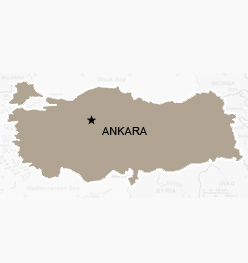
Turkey
Capital Ankara
Population 76.8 million
Life Expectancy 71.96.9
Access to clean water 97%
Adult literacy 87.4%
Under five mortality 25.78 per 1,000 live births
GDP per head (US$ PPP) $11,900
-
Country Fact Sheet
 This Fact Sheet summarizes the key achievements of the Joint Programmes in Turkey.
Turkey Joint Programmes Fact Sheet.pdf (154 KB)
Our Joint Programmes
Enhancing the Capacity of Turkey to Adapt to Climate Change Turkey is highly vulnerable to climate change. As part of the southern belt of Mediterranean Europe, the country is already facing increased temperature and decreased precipitation trends. The Joint Programme's goal was to develop national capacity for managing climate change risks for rural and coastal development in Turkey by mainstreaming climate change in development frameworks and promoting pilot adaptation projects. Harnessing Sustainable Linkages for SMEs in Turkey’s Textile Sector Although economic and social conditions in Turkey have improved rapidly in the last 10 years, the country still suffers from some key development challenges, including significant regional disparities and high unemployment among youth and women. Targeting small and medium enterprises (SMEs) in the textile sector, the largest and most labour-intensive sector in Turkey, this innovative Joint Programme assisted local businesses to develop sustainable competitiveness and improve working conditions, particularly for women in disadvantaged communities in poor areas. Growth with Decent Work for All Turkey’s impressive economic growth in the last decade has not been matched by a strong growth in job creation. Even though overall unemployment has declined in recent years, the youth jobless rate was more than 18% in 2011, twice the national average, with young women only half as likely to be working as young men. The Joint Programme's goal was to improve job opportunities for women and young people as a way to reduce poverty, with a focus on vulnerable migrant populations in the Antalya region. Alliances for Culture Tourism (ACT) in Eastern Anatolia Provinces of Eastern Anatolia are the poorest in Turkey, with human development levels far below national averages. Some 30% of people in Kars were estimated to be below the poverty line when the Joint Programme was launched there in 2008, almost twice the national average. The Joint Programme mobilized the culture sector in east Anatolia as a way to increase incomes and enhance the sense of a “shared” culture between the people of eastern Anatolia and of neighboring countries, and among people of different faiths.IN THE NEWS

MDG-F-backed Turkish textiles industry website garners highest international award
The online portal www.styleturkish.com was named “Best Foreign Business Networking Portal” at the Internet Marketing Association Conference in Las Vegas.

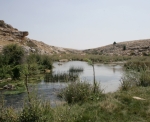
Joint Effort to Better Adapt to Climate Change
95 experts from local government, academia and NGOs met in an MDG-F-funded workshop in Adana, Turkey, to discuss climate change adaptation in the Seyhan River Basin, as part of the UN Joint Programme “Enhancing the Capacity of Turkey to Adapt to Climate Change”.
STORIES
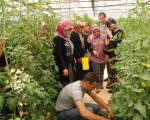
Empowering women farmers in Antalya
Habibe Akıncı is learning eco-friendly agricultural techniques through an MDG-F-funded programme to reduce youth unemployment and bring more women into Turkey’s labor force.

"I am one of the first businesswomen in Kars!"
When Nuran Öyılmaz started her first business more than 20 years ago, she had to sell part of her dowry to get off the ground. Today, this woman entrepreneur is using MDG-F-provided skills to revitalize her eastern Turkish city of Kars.
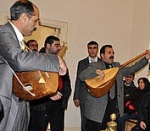
MDG-F helping to preserve Turkish minstrel tradition
The art of minstrelsy is deeply rooted in Turkish cultural life. The MDG-F is helping to safeguard the tradition as a way to boost tourism and economic growth in Turkey’s least developed region.
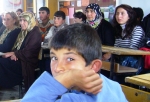
There's a village out there
As the famous Turkish folk song goes, “there’s a village out there that is ours, even though we’ve never been there yet...” There are several communities surrounding the very eastern province of Kars that many of even Turkish people haven’t visited yet, but they hold a considerable potential to develop the tourism sector in the entire Kars region.
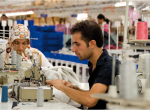
Transforming Turkish Textiles
Aiming to transform the Turkish textile sector into a competitive industry, a new UN Joint Programme will enhance the international competitiveness of SMEs in the textile and clothing sector of Turkey. Launched in early November, “Harnessing Sustainable Linkages for Small and Medium Enterprises in Turkey’s Textile Sector” will concentrate specifically on SMEs located in poor and vulnerable regions such as Gaziantep, Kahramanmaraş, Adıyaman, and Malatya, the programme and integrate them into the global and domestic value chains, providing job for millions residing in these regions.
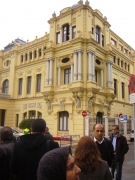
Kars Locals Visit Spain
Following a study tour to Spain organized by a UN Programme not only is Nuran Özyılmaz, a small restaurant owner in the remote city of Kars

 Facebook
 Twitter
 Youtube
 RSS
RSS