
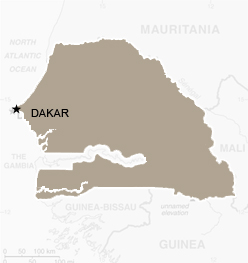
Senegal
Capital Dakar
Population 12 million
Life Expectancy 62.6
Access to clean water 77%
Adult literacy 42%
Under five mortality 136 per 1,000 live births
GDP per head (US$ PPP) $1,792
-
Country Fact Sheet
 This Fact Sheet summarizes the key achievements of the Joint Programmes in Senegal.
Senegal Joint Programmes Fact Sheet.pdf (191 KB)
Our Joint Programmes
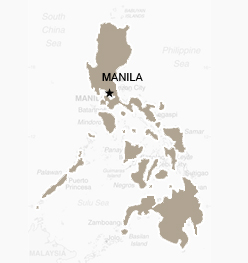
Promoting Initiatives and Cultural Industries in Senegal Senegal has developed policies to promote the country's great cultural diversity, but some regions and groups have been left behind. The goal of the Joint Programme was to support the government in implementing national policies aimed at promoting culture as an engine of sustainable human development, with a focus on vulnerable groups such as women and young people. Preventing and managing child malnutrition in highly vulnerable regions Persistent drought and the rise in food prices have taken a heavy toll in Senegal: more than two million people lacked food security and nearly one in five children under the age of 5 was stunted when the Joint Programme was launched. Its aim was to lower the acute malnutrition rate of children in the five most affected regions to below the international emergency level of 10%. Expanding access to environmental finance - Reversing the decline in forest ecosystem services Senegal is experiencing a high rate of environmental degradation, with rapid deforestation, soil erosion, loss of arable land and a rise in air and water pollution. The Joint Programme was designed to reverse the decline in Senegal's forest ecosystems and to encourage the sustainable use of forest ecosystem services, with the aim of improving livelihoods for vulnerable groups in those areas.Philippines
Capital Manila
Population 84.6 million
Life Expectancy 71.3
Access to clean water 93%
Adult literacy 93.3%
Under five mortality 33 per 1,000 live births
GDP per head (US$ PPP) $5,137
 This evaluation is a knowledge-generating exercise whose goal is to: 1) Assess the MDG-F's contribution, at national level, to the achievement of the MDGs, the principles of the Paris Declaration and the UN reform initiative to “Deliver as One”; 2) Identify best practices and lessons learned in order to inform future joint programming for development; and 3) Connect local level programme interventions with national level policy-making processes by highlighting successful pilot initiatives with the potential for replication and scale-up.
Philippines_Country Final Evaluation.pdf (1.21 MB)-
Country Fact Sheet
 This Fact Sheet summarizes the key achievements of the Joint Programmes in the Philippines.
Philippines Joint Programmes Fact Sheet.pdf (192 KB)
MDG-F Case Study Evaluation
Our Joint Programmes
Alternatives to migration: Decent Jobs for Filipino youth Despite high economic growth, the Philippines, with a fast growing population, is not able to provide sufficient jobs to reduce poverty. Some 1.46 million young people were unemployed in 2010, half of them with secondary school educations and 40 % with college degrees. In the search for decent work, many young Filipinos move from rural to urban areas, with some opting to go overseas. The Joint Programme worked on two fronts: increasing access to decent jobs for young men and women in the country’s poorest areas, and improving policies on youth employment and migration by encouraging the participation of all stakeholders in the process. Ensuring Food Security and Nutrition for Children 0-24 Months Old in the Philippines A 2008 national survey revealed that one in five Filipino children under the age of 5 was underweight and almost a third were stunted. The recent energy, food and financial crises have added to the challenge set by the government of reducing the prevalence of underweight to 17.25% by 2015. The Joint Programme supported these efforts, concentrating on improving exclusive breastfeeding and complementary feeding practices in children 0-24 months. Enhancing Access to and Provision of Water Services with the Active Participation of the Poor Some 16 million Filipinos do not have access to safe drinking water. This Joint Programme improved delivery of water to 122,000 households by encouraging investment in services for poor communities, increasing local capacities to develop, operate and manage water supply utilities and supporting communications campaigns advocating for "water for all." Strengthening the Philippines’ Institutional Capacity to Adapt to Climate Change The Philippines are particularly vulnerable to climate change, which is threatening to hamper attainment of the MDGs. This Joint Programme's goal was to improve the country's capacity to plan and implement projects to mitigate the impact of climate change, with a focus on the most disaster-prone eastern seaboard.IN THE NEWS

Philippines: Fighting poverty is still post-2015 priority
250 civil society organizations, following MDG-F-backed consultation process, say improving quality of life for poorest and most marginalized people should top agenda in MDGs successor framework.


MDG-F promotes breast-feeding in the Philippines
Lactation stations set up in public markets facilitate nursing for women vendors.

MDG-F youth jobs programme transitions to Filipino management
Provincial government will ensure sustainability of employment intiatives in Maguindanao.

STORIES
Filipino youth who can’t find work start their own
In a country with soaring youth unemployment, young people got MDG-Fund support to train as entrepreneurs and open their own businesses.
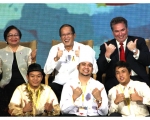
MDG-F marks Youth Day in Philippines
President Benigno Aquino presides at event spotlighting strategies to improve youth employability.
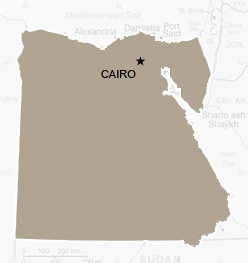
Egypt
Capital Cairo
Population 83 million
Life Expectancy 72.1
Access to clean water 98%
Adult literacy 71.4
Under five mortality 27.2 per 1,000 live births
GDP per head (US$ PPP) $5,400
-
Country Fact Sheet
 This Fact Sheet summarizes the key achievements of the Joint Programmes in Egypt.
Egypt Joint Programmes Fact Sheet.pdf (164 KB)
Our Joint Programmes
Climate Change Risk Management in Egypt Egypt faces serious risks from climate change. The 15th most populous country in the world, it relies on the Nile for 97% of its water and must import 40% of its food; the supply of both is imperiled by climate change, which also threatens to deepen social inequalities. The aim of the joint programme was to help Egypt align its climate risk management and human development efforts by combining mitigation and adaptation under one Climate Risk Management mechanism, and by paying special attention to the country's vulnerable populations. Pro-poor Horticulture Value Chains in Upper Egypt Despite Egypt’s recent economic growth, poverty has expanded, especially in rural Upper Egypt, which contains two thirds of the country's most impoverished citizens. Most small landholders are marginalized and face inefficient value chains. The Joint Programme worked in three locations in the poorest Upper Egyptian Governates to promote equitable partnerships between small farmers and private sector investors and to increase the efficiency of pro-poor horticulture value chains. The Dahshur World Heritage Site Mobilization for Cultural Heritage for Community Development Though Dahshur, home to two of Egypt's oldest and best-preserved pyramids, is an important destination for visitors, the surrounding communities are economically depressed, with increasing pressures from climate change, population growth and a drop-off in tourism due to the recent political turmoil. The aim of the Joint Programme was to protect the Dahshur pyramids area while fostering sustainable development, cultural and ecological management and revenue generation.IN THE NEWS
Red Pyramid is helping to fight poverty in Egypt
An MDG-F-funded programme is boosting tourism and incomes in the region of Dahshur.
STORIES
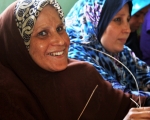
Building new communities in the ruins of the world’s oldest
An MDG-F programme is helping residents of Dahshur, Egypt protect their pyramids, promote tourism and improve their livelihoods.
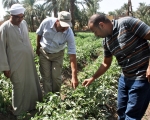
MDG-F backs a revolution in Egyptian farming
When the Arab Spring blew over Egypt in early 2011, most investors predicted chaos and fled. Mohamed Embarak, a farmer in Egypt’s depressed south, saw only opportunity.
Eastern Europe
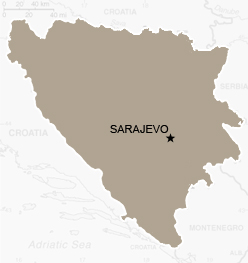
Bosnia and Herzegovina
Capital Sarajevo
Population 4.6 million
Life Expectancy 78.5
Access to clean water n/a
Adult literacy 96.7%
Under five mortality 9.1 per 1,000 live births
GDP per head (US$ PPP) $6,500
 This evaluation is a knowledge-generating exercise whose goal is to: 1) Assess the MDG-F's contribution, at national level, to the achievement of the MDGs, the principles of the Paris Declaration and the UN reform initiative to “Deliver as One”; 2) Identify best practices and lessons learned in order to inform future joint programming for development; and 3) Connect local level programme interventions with national level policy-making processes by highlighting successful pilot initiatives with the potential for replication and scale-up.
Bosnia Herzegovina_Country Final Evaluation.pdf (7.54 MB)-
Country Fact Sheet
 This Fact Sheet summarizes the key achievements of the Joint Programmes in Bosnia & Herzegovina.
Bosnia & Herzegovina Joint Programmes Fact Sheet.pdf (165 KB)
MDG-F Case Study Evaluation
Our Joint Programmes
Securing Access to Water through Institutional Development and Infrastructure Access to safe drinking water in BiH is well below European standards. Water supply and quality is only adequate in large urban centers; in many smaller cities and rural areas, residents have to pay high prices for water delivered with tankers by private vendors. The Joint Programme's objective was to secure access to safe water for all citizens in Bosnia and Herzegovina by strengthening government capacity, increasing investments in the water supply sector and including poor populations in water planning and policy. Mainstreaming environmental governance: linking local and national action in Bosnia and Herzegovina Bosnia and Herzegovina has made significant strides in economic stabilisation and national cohesion in the two decades since the break-up of the former Yugoslavia. However, the environment sector is critically stagnant: there is a lack of environmental policy and legislation, poorly developed management and implementation capacities, little public participation in environmental decision-making and a lack of reliable information and data. The Joint Programme's goal was to boost local management of environmental resources and service delivery by improving environmental governance and developing replicable models for environmental planning. BiH Youth Employability and Retention Programme The employment situation for young people in Bosnia Herzegovina is challenging. The country is still marked by the residual tensions of war, political dynamics between levels of government are complex, policy implementation inefficient, and the transition economy is operating at below potential. In 2012, 60% of the country's young people were jobless. The Joint Programme worked closely with Government, the private sector and civil society to improve the employability of BiH youth and provide new entry points to the labour market. Improving Cultural Understanding in Bosnia and Herzegovina Two decades after the end of the Balkan wars, Bosnia and Herzegovina remains a fragmented society, with divisions along ethnic lines keenly felt, particularly in the school system. The Joint Programme was designed to strengthen the sectors of culture and education as a way to promote sustainable development and an intercultural and tolerant society.IN THE NEWS

MDG-F helps provide access to safe water in Bosnia-Herzegovina
UNDP and local authorities sign MOU for partnership in northern Bihac municipality.

MDG-F program will train 9,000 Bosnian youth in job skills
Youth unemployment is a crucial issue facing Bosnia Herzegovina: nearly 60% of young people there are out of work. CNN reports on an MDG-F -funded program to give unemployed Bosnian youth the skills they need to get and keep a job.

Reconstruction of three religious monuments - symbols of multiculturalism supported by MDGF Culture and Development Programme
Memorandum of Understanding for support of rehabilitation of three valuable cultural heritage sites of Bosnia and Herzegovina: Ferhadija Mosque of Banja Luka, the Orthodox Cathedral of Mostar and Franciscan Monastery of Plehanas, has been signed by Yuri Afanasiev, UN resident Coordinator, highest representatives of BiH, entity and religious institutions.
 Facebook
 Twitter
 Youtube
 RSS
RSS