
The Americas
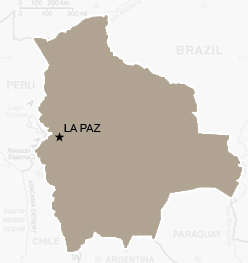
Bolivia
Capital La Paz
Population 9.2 million
Life Expectancy 65.1
Access to clean water 86%
Adult literacy 89.8%
Under five mortality 65 per 1,000 live births
GDP per head (US$ PPP) $2,819
-
Country Fact Sheet
 This Fact Sheet summarizes the key achievements of the Joint Programmes in Bolivia.
Bolivia Joint Programmes Fact Sheet.pdf (222 KB)
Our Joint Programmes
Building the local response capacity for the intersectoral implementation of the PMD-C Chronic malnutrition affects four out of ten Bolivian children in the most food-insecure municipalities in the country, where a child in a rural area is 2.5 times more likely to suffer from malnutrition than in urban areas. This Joint Programme supported the Bolivian government's Zero Malnutrition Multi-sectoral Programme (PMD-C) in 22 highly vulnerable municipalities by improving access to food, water, sanitation and information about nutrition and hygiene. Productive patrimonial assets building and citizenship programme for women in extreme poverty in Bolivia Bolivia still has high levels of poverty and social inequality, especially in rural areas and among indigenous women, who suffer from isolation and marginalization and a lack of services and job opportunities. This Joint Programme focused on indigenous peasant women living in extreme poverty, helping them to generate sustainable livelihoods and enabling them to fully exercise their citizenship. Integrated Prevention and Constructive Transformation of Social Conflicts This Joint Programme's goal was to reduce conflict and promote equity as Bolivia transitions to a democracy which includes greater citizen participation -- particularly of indigenous groups -- and which is more decentralized and socially equitable. The main focus was changing the values and behaviours of people in different social strata, as well as in the structures of the State and civil society, so as to reduce violence and increase conciliation and equity. The Integration of indigenous Andean producers into new national and international value chains Poor producers in Bolivia generate 83% of all employment, but only 25% of GDP. This Joint Programme supported initiatives in fair trade and organic farming as a way to generate income and provide jobs in Altiplano, the country's poorest region.IN THE NEWS
Bolivian municipalities make progress on MDGs
MDG-F initiatives build micro-irrigation systems and support organic food production in Tomina and Villa Alcalá.

Bolivia launches plan to lower child and maternal mortality
Meeting MDGs requires extending health network to remote areas.
STORIES
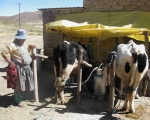
"Seeds" to empower women in Bolivia
The MDG-F is helping to tackle extreme poverty in Bolivia by providing microcredit loans and work opportunities for rural indigenous women.
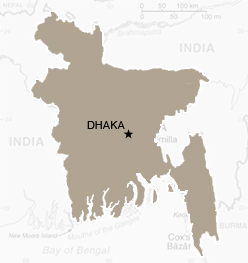
Bangladesh
Capital Dhaka
Population 153.3 million
Life Expectancy 63.5
Access to clean water 80%
Adult literacy 52.5%
Under five mortality 73 per 1,000 live births
GDP per head (US$ PPP) $2,053
-
Country Fact Sheet
 This Fact Sheet summarizes the key achievements of the Joint Programmes in Bangladesh.
Bangladesh Joint Programmes Fact Sheet.pdf (139 KB)
Our Joint Programmes
Joint UN Programme to Address Violence against Women in Bangladesh Violence against women is a serious social, cultural and economic problem in Bangladesh, where nearly two out of three women have experienced gender based violence during their lifetime, and domestic violence is a common, though largely underreported, occurrence. The Joint Programme was designed to tackle the issue of violence against women (VAW) by addressing the policies and legal framework around VAW, changing attitudes and behavior, and protecting survivors of gender-based violence. Protecting and Promoting Food Security and Nutrition for Families and Children in Bangladesh Despite the progress made by Bangladesh in the economic, health and social arenas, improvements in the nutritional status of children and women have been less impressive. The Joint Programme's aim was to improve nutrition and food security for vulnerable children and caregivers in one of the most impoverished areas of Bangladesh, the Barisal Division, which has a high prevalence of stunting and underweight and where almost all children under the age of two years were found to be anemic.IN THE NEWS

5.1 million Bengali children engaged in child labor
ILO report warns that children forced out of school perpetuate cycle of poverty; child labor is a major obstacle to Millennium Development Goals.
STORIES
Fighting HIV-related stigma in Bangladesh
When Usima Marma's husband infected her with HIV, she was shunned by her community. Today she is supporting herself and her son and helping other HIV-affected women gain livelihoods.
Preventing child marriage in Bangladesh
An MDG-F-backed initiative is saving girls like 13-year-old Sonia Khatun from early marriage, a situation experienced by half of Bangladeshi teenage girls.
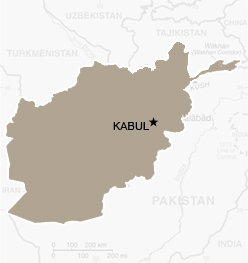
Afghanistan
Capital Kabul
Population 28.3 million
Life Expectancy 44.64
Access to clean water 22%
Adult literacy 28.1%
Under five mortality 151.95 per 1,000 live births
GDP per head (US$ PPP) $700
-
Country Fact Sheet
 This Fact Sheet summarizes the key achievements of the Joint Programmes in Afghanistan.
Afghanistan Joint Programmes Fact Sheet.pdf (154 KB)
Our Joint Programmes
Peace Through Justice Joint Programme Afghanistan’s justice system has been deeply challenged by decades of war. Much of the judicial infrastructure has decayed or been destroyed, corruption is widespread, women's access to justice is often limited and many conflicts are resolved through the traditional justice system. This Joint Programme strengthened both supply and demand for access to justice across Afghanistan's more than 350 districts, the most neglected part of the country's judicial system. Strengthened Approach for the Integration of Sustainable Environmental Management into the ANDS/PRSP Afghanistan’s environment and natural resource base is under tremendous pressure. The decades of conflict, on-going instability, socio-economic insecurity and overall poverty, susceptibility to natural hazards and population boom have accumulated a heavy toll on the environment and the natural resource base of the country.The Joint Programme's goal was to assist Afghanistan in integrating environmental management into its National Development Strategy so as to produce environmentally sustainable growth. Feeding the Children of Afghanistan Together Afghanistan has one of the highest rates of infant and child mortality in the world, and its children suffer widespread stunting and underweight due to poor feeding practices and malnutrition. The UN Joint Programme Feeding the Children of Afghanistan Together used an integrated package of nutrition and food security interventions to attack the immediate and underlying causes of malnutrition, and helped establish the policies, legislation and capacity to tackle malnutrition in the medium and long-term.STORIES
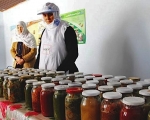
Canning food for better nutrition in Afghanistan
An MDG-F programme that teaches food processing is bringing extra income and improved diets to Afghan women and children.
 Facebook
 Twitter
 Youtube
 RSS
RSS