
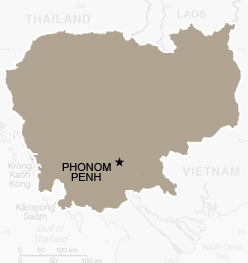
Cambodia
Capital Phnom Penh
Population 14.4 million
Life Expectancy 62.1
Access to clean water 65%
Adult literacy 73.6%
Under five mortality 54.79 per 1,000 live births
GDP per head (US$ PPP) $2,000
-
Country Fact Sheet
 This Fact Sheet summarizes the key achievements of the Joint Programmes in Cambodia.
Cambodia Joint Programmes Fact Sheet.pdf (148 KB)
Our Joint Programmes
Creative Industries Support Programme Cambodia’s tourist industry is booming, but tourism has not brought prosperity to the 5 million Cambodians who live on less than half a dollar a day. Siem Reap Province, which receives 1.5 million tourists each year, is still the second poorest province of Cambodia. The aim of this Joint Programme was to revive Cambodia’s cultural assets and create jobs, spur economic growth and reduce poverty by developing the country’s creative industries. Joint Programme for Children, Food Security and Nutrition in Cambodia Cambodia has made significant progress in reducing infant and child mortality, which both fell more than 60% between 2000 and 2011. However, deep social disparities exist between urban and rural areas, where poverty and child stunting and underweight remain widespread. The Joint Programme aimed at improving the nutritional status of Cambodian women and children, targeting in particular children aged 0-24 months and pregnant and lactating women.IN THE NEWS

UNDP: Rural Cambodians face high risk from climate change
Predicted rises in temperature could have devastating effects on rice crops.

STORIES
Cambodia: Using the airwaves to fight malnutrition
Radio dramas are teaching women in the workplace about healthy food and nutrition practices.
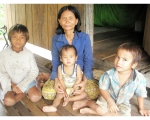
A safety net for Cambodia’s malnourished children
Frail, lethargic and desperately malnourished at the age of nine months, to the smiling, healthy boy he is today, Sok Chea is a success story for the MDG-F-funded programme tackling malnutrition in Cambodia’s Kampong Speu province.
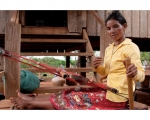
Cutting-edge business tools revamp age-old Cambodian tradition
Indigenous handicraft weavers are learning marketing, quality control and costing skills through an MDG-F-funded programme to boost incomes for the country’s poorest people.

The Americas
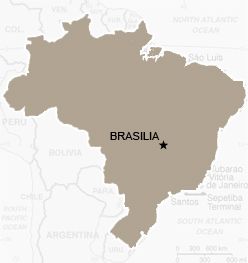
Brazil
Capital Brasilia
Population 198.7 million
Life Expectancy 71.99
Access to clean water 91%
Adult literacy 88.6%
Under five mortality 22.5 per 1,000 live births
GDP per head (US$ PPP) $10,200
-
Country Fact Sheet
 This Fact Sheet summarizes the key achievements of the Joint Programmes in Brazil.
Brazil Joint Programmes Fact Sheet.pdf (176 KB)
Our Joint Programmes
MDGs beyond averages: Promoting Food Security and Nutrition for Indigenous Children in Brazil Four out of ten Brazilian Indians live in extreme poverty, and more than half of indigenous children are anemic. The Joint Programme's goal was to support the government in its efforts to improve the food security and nutritional status of indigenous children in the regions of Dourados and Alto Rio Solimões. Inter-agency Programme for the Promotion of Gender and Ethnic-Racial Equality Brazil's strong economic growth conceals large internal disparities and inequalities, particularly with regard to women and ethnic minorities. This Joint Programme's aim was to reduce gender and racial inequity by supporting the government's work in the design, implementation and monitoring of national policies to promote equality for women and minorities. Security with Citizenship: preventing violence and strengthening citizenship with a focus on children, adolescents and youths in vulnerable conditions in Brazilian communities Urban violence in Brazil’s poor neighborhoods claims thousands of young lives every year. The Joint Programme supported the government in its efforts to prevent violence and promote citizenship, following the Citizens’ Security concept. This approach is being implemented in various countries in Latin America and emphasizes the importance of adopting a multidisciplinary strategy to prevent violence, given the multi-causal roots of conflict.IN THE NEWS
Turning the tide in one of Brazil's most violent cities
A three-year peace-building MDG-F program in Nacional has made shootings and drug traffickers' curfews a thing of the past and reduced youth murders from 20 a year to zero.
Brazilian indigenous youth learn about their right to food
An MDG-F programme is boosting awareness about food security among youth in indigenous communities, where 4 in 10 people live in extreme poverty.
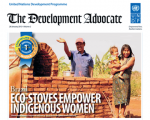
Account of MDG-F's eco-stoves wins UNDP story-telling contest
Story shows how new stoves are empowering Brazil's indigenous women and improving the health of 53,000 people.
STORIES
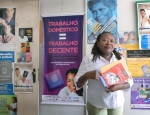
Winning rights for Brazil’s domestic workers
The Brazilian Senate passes a new law after a long, MDG-F-supported process to secure protection for 6.5 million employees.
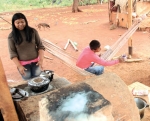
Eco-stoves empower Brazilian women
An MDG-F-backed project is liberating indigenous women like Delma Gonçalves from the time-consuming task of firewood collection.
Angola
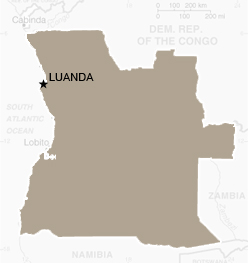
Capital Luanda
Population 12.7 million
Life Expectancy 38.2
Access to clean water 51%
Adult literacy 67.4%
Under five mortality 180.21 per 1,000 live births
GDP per head (US$ PPP) $8,800
-
Country Fact Sheet
 This Fact Sheet summarizes the key achievements of the Joint Programmes in Angola.
Angola Joint Programmes Fact Sheet.pdf (135 KB)
Our Joint Programmes
Children, Food Security and Malnutrition in Angola Three decades of civil war have left Angola with precarious health indicators: the country has one of the highest child mortality rates in the world, and its children suffer from high levels of chronic and acute malnutrition. The Joint Programme's purpose was to alleviate hunger and malnutrition among poor and vulnerable groups in three particularly hard-hit provinces: Bie, Moxico and Cunene. Governance of Water and Sanitation in Angola’s Poor Neighbourhoods Improving access to safe drinking water and adequate sanitation is one of the greatest development challenges in Angola. The government’s objective is to increase the proportion of people having access to safe drinking water and adequate sanitation from 33% to 81% and from 48% to 74% , respectively, in the period 2003-2016. The Joint Programme supported this aim with infrastructure improvements and by enhancing the governance of the sector.IN THE NEWS
MDG-F supports Angolan roundtable on right to water
UN joint program empowers communities to manage water and sanitation services.
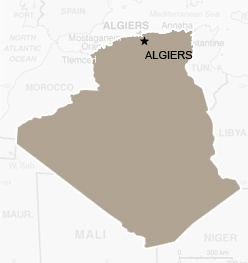
Algeria
Capital Algiers
Population 34 million
Life Expectancy 74.02
Access to clean water 85%
Adult literacy 69.9%
Under five mortality 27.74 per 1,000 live births
GDP per head (US$ PPP) $6,900
-
Country Fact Sheet
 This Fact Sheet summarizes the key achievements of the Joint Programme in Algeria.
Algeria Joint Programmes Fact Sheet.pdf (154 KB)
Our Joint Programmes
Joint programme for gender equality and the empowerment of women in Algeria The aim of the joint programme was to support Algeria's efforts for gender equality and the empowerment of women, with a particular focus on improving access to employment for women.IN THE NEWS

MDG-F empowering vulnerable women in Algeria
Joint UN programme aims to improve gender equality and increase work opportunities for disadvantaged women.
 Facebook
 Twitter
 Youtube
 RSS
RSS