
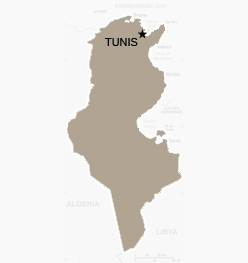
Tunisia
Capital Tunis
Population 10.3 million
Life Expectancy 75.78
Access to clean water 94%
Adult literacy 74.3%
Under five mortality 22.57 per 1,000 live births
GDP per head (US$ PPP) $7,900
-
Country Fact Sheet
 This Fact Sheet summarizes the key achievements of the Joint Programme in Tunisia.
Tunisia Joint Programmes Fact Sheet.pdf (149 KB)
Our Joint Programmes
Engaging Tunisian Youth to Achieve the MDGs The turmoil that shook Tunisia during the Arab Spring was directly related to the lack of jobs for young Tunisians, especially in marginalized areas of the North West, West and South. A third of young people are jobless, an urgent challenge for the new government as it works toward the Millennium Development Goal target of full and productive employment for all. This Joint Programme supported efforts to develop capacities in migration-prone areas by creating decent jobs and promoting local competencies.IN THE NEWS

MDG-F supports Tunisian youth at record-breaking artisan fair
Beneficiaries of youth employment programme showcase their crafts at event featuring 700 participants and 130,000 visitors.

STORIES
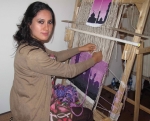
Building youth’s futures in Tunisia
The MDG-F is helping Najet Salem accomplish her dreams: reviving the ancient carpet-weaving tradition and empowering the women artisans of her hometown of Gafsa.
Jobs for Tunisian youth: "We must have a vocation and take risks"
In a country where one in three young people is unemployed, Marouane Ben Othman used a little push from the MDG-Fund to start his own business and put eight other people to work.
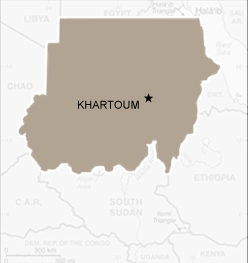
Sudan
Capital Khartoum
Population 34 million
Life Expectancy 62.57
Access to clean water 60%
Adult literacy 61.1%
Under five mortality 55.63 per 1,000 live births
GDP per head (US$ PPP) $3,000
-
Country Fact Sheet
 This Fact Sheet summarizes the key achievements of the Joint Programmes in Sudan.
Sudan Joint Programmes Fact Sheet.pdf (142 KB)
Our Joint Programmes
Sustained Peace for Development: Conflict Prevention and Peace-Building in Sudan The South Kordofan area of Sudan is one of the most complex conflict systems in the country, with increasingly serious tensions building since the signing of the Comprehensive Peace Agreement in 2005 and the secession of South Sudan in 2011. The Joint Programme aimed to prevent conflict from relapsing in four bordering states of Sudan by bolstering peace building, the rule of law and socioeconomic recovery within -- and between -- vulnerable communities and local authorities in targeted areas and villages. Creating opportunities for Youth Employment in Sudan Sudan's Comprehensive Peace Agreement, signed in 2005, provided an enabling environment for the return of more than four million displaced people. Yet poverty and unemployment remain high, particularly in the southern areas devastated by the 21-year civil war. The Joint Programme's goal was to improve job prospects for youth, particularly returnees and demobilized soldiers, through skills development, the creation of employment opportunities and ensuring that job creation is integrated in national development policies.IN THE NEWS

Employment challenges faced by Sudan youth
MDG-F-backed study says long-term commitment and adequate microfinance are crucial to young people's financial inclusion.

Brazil, India, South Africa fund to aid South Sudan
Sudan will get support for reconstruction after its 22-year civil war from a development fund set up by India, Brazil and South Africa. The move will primarily benefit South Sudan, which voted overwhelmingly in January to secede from the north.
Eastern Europe
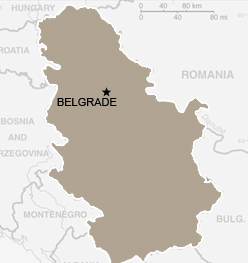
Serbia
Capital Belgrade
Population 7.3 million
Life Expectancy 73.9
Access to clean water 99%
Adult literacy 96.4%
Under five mortality 6.75 per 1,000 live births
GDP per head (US$ PPP) $10,800
-
Country Fact Sheet
 This Fact Sheet summarizes the key achievements of the Joint Programmes in Serbia.
Serbia Joint Programmes Fact Sheet.pdf (158 KB)
Our Joint Programmes
Promoting Peace Building in Southern Serbia South Serbia has the country’s only concentration of ethnic Albanians, and is also the poorest part of Serbia. Tensions continue to exist over inequalities, actual and perceived, between ethnic communities in South Serbia and between the south and the rest of the country. The Joint Programme addressed the key obstacles to sustainable peace in the region by strengthening dialogue and social cohesion, improving access to and quality of public services, and stimulating equitable economic development. Sustainable Tourism for Rural Development In spite of a decade of economic growth and a halving of its poverty rate, Serbia continues to experience significant disparities in development. People in rural areas are twice as poor as city dwellers, and three out of four are subsistence farmers. To reduce poverty and emigration in rural areas, the MDG-Fund helped develop sustainable tourism as a means of boosting economic activity and increasing employment. Support to National Efforts for the Promotion of Youth Employment and Management of Migration Young people in Serbia face dismal job prospects -- nearly half of all youth were unemployed when the Joint Programme began in 2009. The programme worked with the government to increase youth employment, especially for disadvantaged young women and men and members of the Roma minority, while concurrently reducing the negative impact of return and irregular migration.STORIES
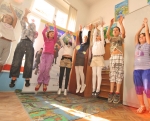
How do I draw the “Right to love?”
Children of different ethnicities get to know each other through art, song and dance at an MDG-F peace-building workshop in southern Serbia.
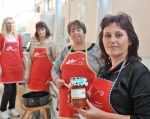
The Vlasina Lake Housewives : Building peace in South Serbia
27 women have formed an UN-backed cooperative to boost incomes in one of the country’s least developed regions, one jam jar at a time.
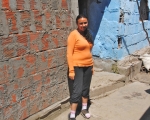
Securing equal rights for Serbia’s Roma minority
21-year-old Anita Jovic recently received her first state-issued ID card, entitling her to all the rights of a citizen -- one of 250 members of Serbia's Roma minority who are no longer legally invisible, thanks to assistance from the MDG-F.
More than 2000 unemployed Serbian youth get training and jobs
MDG-F helps disadvantaged young people become more employable through grants, training and work placements in companies.
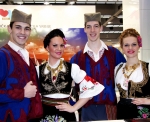
MDG-F spurs rural development in Serbia
The MDG-F is funding efforts to boost tourism in Serbia’s rural areas, where unemployment is high and nearly one in ten people live below the poverty line.
A new life in Serbia
“After having spent nearly 10 years in a collective center, we are now starting a new life.” Orhan and Mersiha Kurtesi recently bought a house for their family with the help of the MDG-F and a UN program to provide permanent homes for people displaced by the Kosovo war.

The Americas
Peru
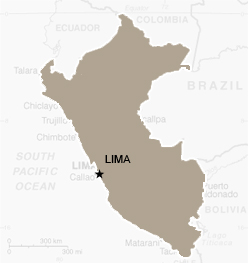
Capital Lima
Population 29.5 million
Life Expectancy 70.74
Access to clean water 84%
Adult literacy 92.9%
Under five mortality 28.6 per 1,000 live births
GDP per head (US$ PPP) $8,500
-
Country Fact Sheet
 This Fact Sheet summarizes the key achievements of the Joint Programmes in Peru.
Peru Joint Programmes Fact Sheet.pdf (293 KB)
Our Joint Programmes
Improving Nutrition and Food Security for the Peruvian Child: a Capacity Building Approach Indigenous children of Peru's High Andes and Amazon regions are among the most malnourished in the world: up to half of them suffer from chronic malnutrition and many are anemic and Vitamin A deficient. This Joint Programme supported the Peruvian government's effort to improve food security and nutrition in four of the country's poorest regions by accelerating implementation of the National Strategy “CRECER.” Integrated and adaptive management of environmental resources and climatic risks in High Andean micro-watersheds This Joint Programme's aim was to develop and reinforce the abilities of Peru's local and regional governments, communal authorities and the general population to improve management of environmental resources and the provision of services in High Andean rural areas. It took a participatory, informed and decentralized perspective that incorporated environmental and climate change issues into public policy decisions at the local and regional government levels. Inclusive creative industries: an innovative tool for alleviating poverty in Peru This Joint Programme worked to alleviate poverty in four of Peru's most disadvantaged regions by developing inclusive creative industries in tourism, handicrafts, organic agriculture and gastronomy. Peru: Promotion of employment and MSEs for Youth and Management of Juvenile Labor Migration Despite achieving the highest average growth rate in Latin America over the last decade, Peru still struggles with inequalities, particularly among youth. While those with qualifications and skills have benefitted from the economic activity, many young people are jobless, and just over half say they would leave the country if given the opportunity. This Joint Programme sought to promote employment and microenterprise for Peruvian youth, and to manage their migration, by creating more and better opportunities for them to secure decent work.IN THE NEWS

Peru's craft producers benefit from MDG-F programme
Training in artisanry, weaving, gastronomy and tourism improve livelihoods for 2,300 in 4 regions.

MDG-Fund convenes talks on human trafficking
Officials from Peru and Ecuador meet in first binational talks on preventing trafficking and caring for its victims.

Peru launches plan to combat extreme poverty
MDG-F-funded programme also helping to reduce chronic child malnutrition in indigenous region.
STORIES
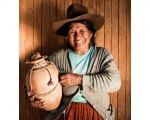
2,500 Peruvian families make tradition a way of life
The MDG-F supports small businesses to reduce poverty in the High Andes.
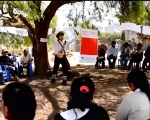
The value of words
The MDG-F leverages the potential of oral tradition to heal wounds, share knowledge and improve health in four of Peru’s poorest regions.
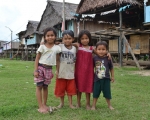
Empowering farmers and fighting inequality in Peru
An MDG-F programme is improving life for some of the world’s most malnourished children.
 Facebook
 Twitter
 Youtube
 RSS
RSS