
The Americas
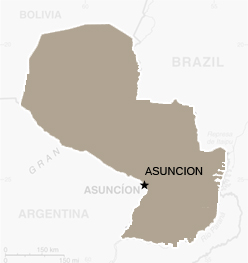
Paraguay
Capital Asuncion
Population 6.9 million
Life Expectancy 75.77
Access to clean water 77%
Adult literacy 94%
Under five mortality 24.68 per 1,000 live births
GDP per head (US$ PPP) $4,200
-
Country Fact Sheet
 This Fact Sheet summarizes the key achievements of the Joint Programmes in Paraguay.
Paraguay Joint Programmes Fact Sheet.pdf (168 KB)
Our Joint Programmes
Strengthening the ability to define and apply water and sanitation policies Paraguay struggles with considerable water and sanitation challenges. Only half of the poorest households have drinkable water, and only 10% of all sewage is treated. Paraguay's indigenous communities are particularly badly off: only 6% of households have drinking water, and only 3% have access to sanitation. The Joint Programme was aimed at increasing access to sanitation and potable water, with an emphasis on dispersed rural communities and indigenous populations. Economic Capacities and Opportunities for Social Inclusion This Joint Programme worked with the government of Paraguay to overcome youth employment challenges and their impact on migration, and laid the foundation for the implementation of a national policy on youth employment. The primary focus was domestic workers and disadvantaged youth at risk of migrating.IN THE NEWS
Clean water out of reach for native peoples
60% of indigenous households in Paraguay use surface or rainwater because they are not connected to piped water.

STORIES
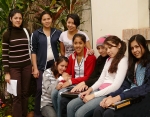
"We're learning a lot, and the programme is teaching us to love ourselves"
The MDG-F is working in Brazil and Paraguay to improve living conditions for domestic workers, a vulnerable group that has spent decades fighting for recognition of its rights.
The Americas
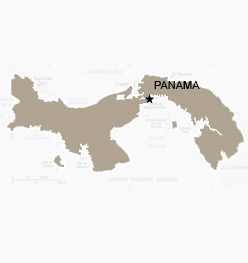
Panama
Capital Panama City
Population 3.3 million
Life Expectancy 77.25
Access to clean water 92%
Adult literacy 91.9%
Under five mortality 12.67 per 1,000 live births
GDP per head (US$ PPP) $11,700
-
Country Fact Sheet
 This Fact Sheet summarizes the key achievements of the Joint Programmes in Panama.
Panama Joint Programmes Fact Sheet.pdf (194 KB)
Our Joint Programmes
Strengthening equity in access to safe drinking water and sanitation by empowering citizens and excluded indigenous groups in rural areas Ninety-one per cent of the indigenous population of Panama's Ngöbe-Buglé Region suffers from extreme poverty. Their dispersion, mobility and location in remote and inaccessible areas raise the cost of traditional sanitation solutions, limiting investment and private participation. This Joint Programme used an intercultural and gender-based approach to increase basic services to marginalized communities and to empower local populations to manage their own water resources. Integration of Climate Change Adaptation and Mitigation Measures in the Management of Natural Resources in Four Priority Watersheds of Panama This Joint Programme worked in rural and indigenous communities in Panama to implement measures for combatting the effects of climate change, such as sustainable agriculture techniques, the use of energy-efficient stoves, water safety, reforestation and early warning systems to protect against floods. Entrepreneurial Opportunities Network for Poor Families This Joint Programme sought to reduce levels of poverty in Panama, especially in rural areas and indigenous regions, by supporting poor populations in launching sustainable micro-enterprises, with an emphasis on the farming and tourism sectors. Improving citizens' security in Panama -- contributing to the social construction of peace Although Panama's rate of human development has improved, inequalities have risen and 40% of the population now lives below the poverty line. In the last decade, homicide rates more than doubled, giving Panama one of the highest rates of violence in the region. This UN Joint Programme aimed to reduce violence and crime by strengthening institutional mechanisms and policies in the justice and security sectors, coordinating relevant stakeholders, and including vulnerable groups, particularly youth, in decision-making processes.STORIES
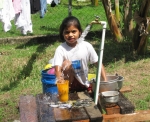
Water leads to empowerment in rural Panama
Rural and indigenous people are finding their voice through an MDG-F-backed programme to boost local control of water management.
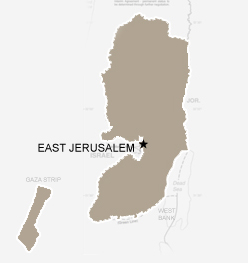
Occupied Palestinian Territory
Capital East Jerusalem
Population 3.9 million
Life Expectancy 73.1
Access to clean water 89%
Adult literacy 92.4%
Under five mortality 23 per 1,000 live births
GDP per head (US$ PPP) $1,100
-
Country Fact Sheet
 This Fact Sheet summarizes the key achievements of the Joint Programmes in the Occupied Palestinian Territory.
OPT Joint Programmes Fact Sheet.pdf (134 KB)
Our Joint Programmes
Gender equality and women's empowerment in the OPT Women in the Occupied Palestinian Territory suffer from high levels of poverty and unemployment, with women refugees particularly vulnerable. The rate of female participation in the labor market in the West Bank and Gaza stood at 13.4 % in 2006, half the average rate in Arab countries and one of the lowest in the world. The Joint Programme promoted Palestinian women's social, economic and political empowerment and worked to reduce gender-based violence by encouraging women's political voice, increasing their opportunities to obtain decent and productive work, and improving their access to protection and justice. Culture and Development The Occupied Palestinian Territory has suffered from slowing growth and high unemployment in recent years, particularly among women and youth. The Joint Programme's goal was to create sustainable socio-economic development in the West Bank and Gaza through culture-related activities and tailor-made programmes based on the notion of cultural diversity.STORIES
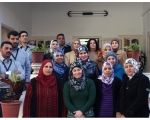
Striking out against gender-based violence in Gaza
The MDG-F helps open the first-ever integrated shelter and facility to reduce violence against Palestinian women in Gaza.
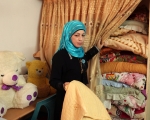
Traditions build livelihoods for Palestinian women
Against a backdrop of conflict and limited economic opportunities, a group of West Bank women are revitalizing traditional Palestinian hospitality and building livelihoods for themselves.

Palestinian identity unfolds on two stages
As the West Bank Palestinian leadership was readying its September statehood bid at the United Nations General Assembly, 20-year-old Mariam Abu Khaled was preparing for a different drama.

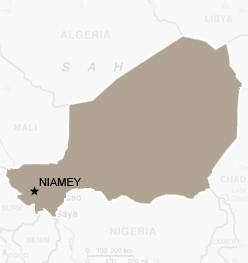
Niger
Capital Niamey
Population 15.3 million
Life Expectancy 52.6
Access to clean water 42%
Adult literacy 28.7%
Under five mortality 11.66 per 1,000 live births
GDP per head (US$ PPP) $700
-
Country Fact Sheet
 This Fact Sheet summarizes the key achievements of the Joint Programmes in Niger.
Niger Joint Programme Fact Sheet.pdf (149 KB)
Our Joint Programmes
Childhood, food security and nutrition programme Although Niger has made progress in reducing infant mortality, food and nutrition insecurity remain big challenges. One in ten of Niger's children are acutely malnourished; in some areas, 20% of youngsters aged 6 to 23 months suffer from severe acute malnutrition. This Joint Programme took a multi-sectorial approach to preventing and treating malnutrition, increasing basic social services and improving the food security of the most vulnerable populations.STORIES
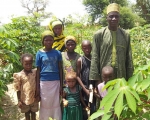
Niger’s schoolchildren learn reading, writing, weeding and watering
When school opened in the southern Niger village of Falki Babba, there was a novelty for the students: working in the school’s new vegetable garden. It’s part of an MDG-F-funded programme to tackle some of the highest chronic malnutrition rates in Africa.
 Facebook
 Twitter
 Youtube
 RSS
RSS