
The Americas
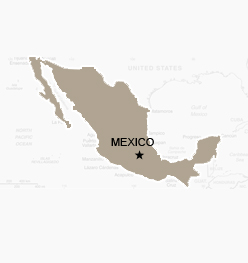
Mexico
Capital Mexico City
Population 111.2 million
Life Expectancy 76.06
Access to clean water 95%
Adult literacy 91%
Under five mortality 18.42 per 1,000 live births
GDP per head (US$ PPP) $14,200
-
Country Fact Sheet
 This Fact Sheet summarizes the key achievements of the Joint Programmes in Mexico.
Mexico Joint Programmes Fact Sheet.pdf (171 KB)
Our Joint Programmes
Establishing effective and democratic water and sanitation (W&S) management in Mexico to support the achievement of the MDGs Although the states of Chiapas, Tabasco and Veracruz account for most of Mexico's water resources, water and sanitation service coverage is very uneven due to socioeconomic factors, ethnicity and gender inequality. The aim of this Joint Programme was to improve the integrated management of water in peri-urban and rural areas of Mexico and to combat poverty from the standpoint of environmental sustainability and gender equality. The programme contributed to achieving MDGs 1, 3 and 7 by diminishing inequalities in accessing an essential resource, particularly for women and the poor. Conflict prevention, development of agreements and peace building for internally displaced persons (IDPs) in Chiapas State The 1994 clash between the Mexican State and the Zapatista resulted in tens of thousands of people being driven off their land. Many of these remain displaced, fueling strife and perpetuating poverty in Mexico's least developed state. The aim of this Joint Programme was to reduce conflict and tension in 25 communities in Chiapas by strengthening the criminal justice system, improving security and developing a culture of peace.IN THE NEWS
MDG-F helped lower conflict in Mexican state
A joint UN programme improved access to justice and the rights of displaced people, and promoted a culture of peace in Chiapas.


Mexican state passes law to protect rights of internally displaced
Legislation developed with MDG-F support contains highest standards of human rights protection for 6,000 families displaced by religious strife, armed conflict and natural disasters in Chiapas.

Mexico says it is close to achieving Millennium Development Goals
Universal primary education and child nutrition targets already met; poverty goal is in sight.

STORIES
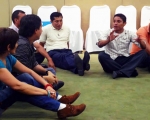
Towards a culture of peace and respect in Chiapas
The MDG-F supports police training to instill the importance of caring for people with dignity and respect in conflict-prone southeastern Mexico.
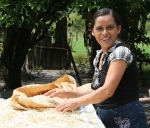
Land deeds and patience produce peace in Chiapas village
An MDG-F-supported programme mediates tensions and resolves property disputes in the troubled Mexican state.
Mauritania
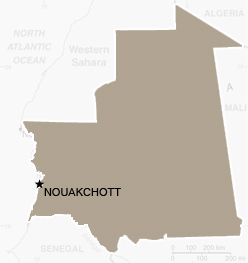
Capital Nouakchott
Population 3.1 million
Life Expectancy 60.37
Access to clean water 60%
Adult literacy 51.2%
Under five mortality 63.42 per 1,000 live births
GDP per head (US$ PPP) $2,100
 This evaluation is a knowledge-generating exercise whose goal is to: 1) Assess the MDG-F's contribution, at national level, to the achievement of the MDGs, the principles of the Paris Declaration and the UN reform initiative to “Deliver as One”; 2) Identify best practices and lessons learned in order to inform future joint programming for development; and 3) Connect local level programme interventions with national level policy-making processes by highlighting successful pilot initiatives with the potential for replication and scale-up.
Mauritania_Country Final evaluation.pdf (1.97 MB)-
Country Fact Sheet
 This Fact Sheet summarizes the key achievements of the Joint Programmes in Mauritania.
Mauritania Joint Programmes Fact Sheet.pdf (200 KB)
MDG-F Case Study Evaluation
Our Joint Programmes
Scaling up the fight against child hunger and malnutrition in southeast Mauritania This Joint Programme was established to combat an alarming increase in malnutrition in two southeastern regions of Mauritania, where the underweight prevalence in children under 5 rose from 35% in 2007 to 40% in 2008, more than twice the national average. The programme comprised a package of integrated interventions for the prevention and treatment of malnutrition, targeting more than 420,000 women and children with actions to improve food security, change feeding behaviors and strengthen the management of malnutrition. Mainstreaming Local Environmental Management in the Planning Process Southwestern Mauritania faces considerable environmental problems, with deteriorating natural resources and populations living in conditions of poverty, precarious health and a lack of basic services. In rural areas, only 20% of households have access to sanitation and nearly two thirds of people live below the poverty line, further exacerbating resource degradation. The aim of this Joint Programme was to promote sustainable management of natural resources and access to water and sanitation, and to ensure that environmental issues are taken into account in national planning processes. Strengthening conflict prevention capacities and the rule of law in Mauritania An explosion of ethnic tensions in 1989 precipitated a mass expulsion of tens of thousands of Mauritanians and produced a climate of tension, uncertainty and animosity. Declining living conditions, rising unemployment and poverty, and the uneven distribution of resources exacerbated traditional sources of conflict -- access to land and water -- and social prejudices and discrimination became rampant. The Joint Programme's goal was to reduce conflict and inter-community tensions by promoting national unity and the rule of law, improving the equal distribution of resources and creating conflict resolution mechanisms. Heritage, tradition and creativity for sustainable development in Mauritania Part of Mauritania's strategic fight against its high poverty rates is to develop tourism and related areas. The Joint Programme supported this goal by encouraging the growth of Mauritania's cultural sector as a way to drive development and generate incomes, with particular emphasis on women's activities. The programme focused on strengthening the national capacity to develop and promote cultural businesses, as well as the management, conservation and enhancement of the country's cultural heritage.IN THE NEWS
Mauritania advances in fight against malnutrition
UNICEF report shows how an innovative MDG-F-backed approach has helped reduce infant deaths.
STORIES
Traditions as tools against poverty and unemployment
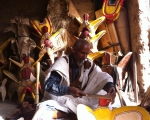
The MDG-F builds livelihoods in Mauritania through micro-credit loans to artisans, arts festivals and support to the tourism industry.
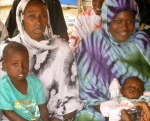
Combatting malnutrition in Mauritania
When Zenabou Mint Magha brought her child to the MDG-F-funded feeding center, the 7-month-old baby was near death. Today, she's on the road to recovery.
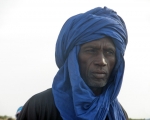
Rebuilding broken bridges in Mauritania
Once friendly, villages divided by ethnic tensions are rebuilding their relations through an MDG-F programme to reduce conflict and improve understanding.
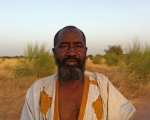
Fighting back the desert in Mauritania
Villagers across this Saharan country are reclaiming land from the sand dunes, replanting trees and rebuilding their lives with the support of the MDG-F.
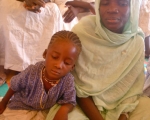
Building resilience in drought-stricken Mauritanian communities
The MDG-F is helping to combat an alarming increase in malnutrition in two southeastern regions of Mauritania, where 40% of children are moderately to severely malnourished.
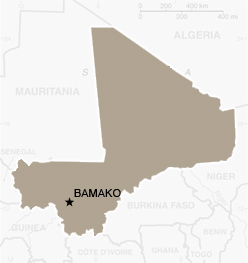
Mali
Capital Bamako
Population 12.6 million
Life Expectancy 50:35
Access to clean water 60%
Adult literacy 46.4%
Under five mortality 102.05 per 1,000 live births
GDP per head (US$ PPP) $1,200
-
Country Fact Sheet
 This Fact Sheet summarizes the key achievements of the Joint Programme in Mali.
Mali Joint Programme Fact Sheet.pdf (139 KB)
Our Joint Programmes
Improving Child Nutrition and Food Security in the most vulnerable municipalities in Mali Mali has one of the highest rates of child malnutrition and food insecurity in the world. One in six children suffers from acute malnourishment and more than a third are stunted from a lack of proper nutrients. Though Mali has made progress in reducing child deaths, more than half of those that occur are due to malnutrition. The aim of the Joint Programme was to improve food security and the nutritional status of women and children, enhance Mali's ability to monitor food and nutrition issues and ensure that these are considered in national and community policy-making.STORIES
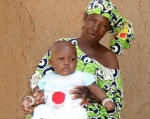
Reducing child deaths in Mali
The nutritional status of children in Mali is grim. When Habi Karembé was brought to a MDG-F-supported village health center last spring, she weighed just 4-1/2 pounds. Today, she is back in her village and thriving.
Eastern Europe
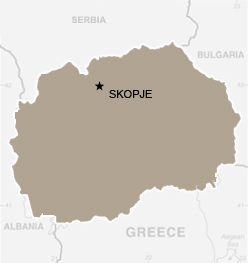
The Former Yugoslav Republic of Macedonia
Capital Skopje
Population 2 million
Life Expectancy 74.68
Access to clean water n/a
Adult literacy 96.1%
Under five mortality 9.01 per 1,000 live births
GDP per head (US$ PPP) $9,100
-
Country Fact Sheet
 This Fact Sheet summarizes the key achievements of the Joint Programmes in the Former Yugoslav Republic of Macedonia.
FYR Macedonia Joint Programme Fact Sheet.pdf (116 KB)
Our Joint Programmes
Enhancing Inter-Ethnic Community Dialogue and Collaboration in FYR Macedonia Inter-ethnic community cohesion and dialogue are central to the development of the Former Yugoslav Republic of Macedonia, which has faced social, political and economic challenges since its independence in 1991, including an inter-ethnic conflict in 2001. The Joint Programme worked to promote a multi-cultural civic identity within the country, establishing systems to link local and national mechanisms dealing with inter-ethnic relations and building conflict resolution expertise.STORIES
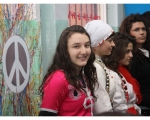
Students in FYR Macedonia build a multi-ethnic future
In FYR Macedonia, where schools and classrooms are increasingly segregated along ethnic lines, Kicevo's Sande Sterjoski Primary School is an unusual place.
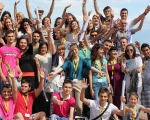
Young Macedonians reach across ethnic divides
Ethnic Macedonians, Albanians and Roma gather at an MDG-F-supported conference to break down cultural barriers and learn how to live together in a multi-cultural society.
 Facebook
 Twitter
 Youtube
 RSS
RSS