The Americas
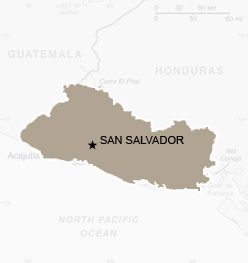
El Salvador
Capital San Salvador
Population 7.1 million
Life Expectancy 72.33
Access to clean water 84%
Adult literacy 80.2%
Under five mortality 21.52 per 1,000 live births
GDP per head (US$ PPP) $6,200
 This evaluation is a knowledge-generating exercise whose goal is to: 1) Assess the MDG-F's contribution, at national level, to the achievement of the MDGs, the principles of the Paris Declaration and the UN reform initiative to “Deliver as One”; 2) Identify best practices and lessons learned in order to inform future joint programming for development; and 3) Connect local level programme interventions with national level policy-making processes by highlighting successful pilot initiatives with the potential for replication and scale-up.
El Salvador_Country Final Evaluation.pdf (1.32 MB)-
Country Fact Sheet
 This Fact Sheet summarizes the key achievements of the Joint Programmes in El Salvador.
Guatemala Joint Programmes Fact Sheet.pdf (211 KB)
MDG-F Case Study Evaluation
Our Joint Programmes
Protecting children: towards a coordinated food security and nutritional programme for El Salvador A sharp decline in remittances, augmented by rising food and fuel prices, spiked poverty and malnutrition levels in El Salvador during the last decade. In 2008, extreme poverty rose by 6.5%, and 87% of poor households reduced food consumption levels, threatening El Salvador’s important gains toward fulfilling the MDGs in areas like hunger and poverty reduction (MDG 1) and improved infant mortality rates (MDG 4). This Joint Programme's aim was to build consensus and strengthen the government's capacity to set forth integrated approaches to alleviate child hunger, malnutrition and food insecurity. Urban and Productive Integrated Sustainable Settlements El Salvador El Salvador suffers from a significant housing shortage, which, together with overcrowding and high levels of insecurity in many urban settlements of San Salvador, impacts not only on the quality of life of its inhabitants, but is also a source of violence and conflict and reduces the potential and opportunities for economic development. The Joint Programme was geared towards inclusive growth of El Salvador's urban areas and the generation of decent work within a sustainable environment. It focused on creating strategic partnerships that integrate the private and public sectors, civil society organizations and the urban poor population of San Salvador. Building social capital to reduce violence: A new transition in El Salvador El Salvador has the highest levels of violence in all of Latin America. It has a homicide rate of almost 70 per 100,000 inhabitants and alarming rates of other kinds of violence, all of which impede the consolidation of democratic government, human development and the achievement of the MDGs. This initiative worked to build consensus and strengthen state capacities for the prevention and reduction of armed violence, benefiting institutions at the national level and locally in the Metropolitan Area of San Salvador.IN THE NEWS
El Salvador achieves Millennium Development Goal of reducing maternal mortality
Maternal deaths declined from 71.2 to 50.8 per 100,000 live births between 2006 and 2011.

STORIES
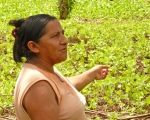
Fighting child malnutrition in El Salvador
The MDG-F is helping 500 families diversify production and improve their food crops in Morazán, where nearly half the population lives in extreme poverty.
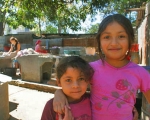
Building a “Big Apple” in the slums of San Salvador
Transformed shanty-town will soon provide water, electricity, private toilets and new livelihoods to families living in extreme poverty on the edge of El Salvador’s capital.
The Americas
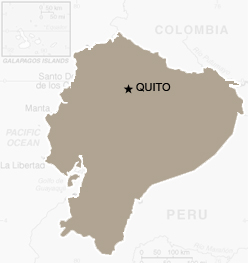
Ecuador
Capital Quito
Population 14.5 million
Life Expectancy 75.3
Access to clean water 95%
Adult literacy 91%
Under five mortality 20.9 per 1,000 live births
GDP per head (US$ PPP) $7,500
 This evaluation is a knowledge-generating exercise whose goal is to: 1) Assess the MDG-F's contribution, at national level, to the achievement of the MDGs, the principles of the Paris Declaration and the UN reform initiative to “Deliver as One”; 2) Identify best practices and lessons learned in order to inform future joint programming for development; and 3) Connect local level programme interventions with national level policy-making processes by highlighting successful pilot initiatives with the potential for replication and scale-up.
Ecuador_Country Final Evaluation.pdf (1.73 MB)-
Country Fact Sheet
 This Fact Sheet summarizes the key achievements of the Joint Programmes in Ecuador.
Ecuador Joint Programmes Fact Sheet.pdf (259 KB)
MDG-F Case Study Evaluation
Our Joint Programmes
Governance in the water and sanitation sector in Ecuador within the framework of the Millennium Development Goals The coverage and quality of water and sanitation services was below the national average in some poor regions of Ecuador where the Joint Programme operated, with large gaps in the coverage and services between rural and urban areas. The programme contributed to the development of democratic governance of Ecuador's water and sanitation services, focusing on integrated water resources management and social, land and gender equality. Conservation and Sustainable Management of the Natural and Cultural Heritage of the Yasuní Biosphere Reserve This Joint Programme's goal was to support the conservation and management of the Yasuní Biosphere Reserve (YBR), one of the world’s greatest areas of biodiversity, and a national priority for Ecuador. The programme focused on implementing community-based economic alternatives for the most vulnerable populations, and on initiatives to deal with climate change through adaptation and the non-emission of greenhouse gases. Youth, Employment, Migration – Reducing Inequalities in Ecuador Ecuadorian youth between 15 and 29 account for around one quarter of the population, an age group marked by high levels of underemployment and unemployment, as well as precarious working conditions, which, together with other factors, encourage migration. This Joint Programme improved opportunities for youth experiencing social, economic, gender, land and cultural inequities by fostering decent employment and economic enterprises. Development and Cultural Diversity to reduce Poverty and promote Social Inclusion As a result of their culture or ethnicity, many minorities and disadvantaged populations in Ecuador suffer discrimination and social exclusion, and their rights and opportunities for education, health and agricultural production are severely neglected. The Joint Programme promoted the revaluation of culture, inclusion and intercultural dialogue as a means to reduce this discrimination and to break the cycle of poverty affecting these groups.IN THE NEWS

UN and Ecuador widen plan to save Yasuní forest in Amazon
UNDP launches initiative to accept donations of all sizes to its trust fund to preserve one of the world's most bio-diverse areas.
STORIES
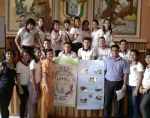
Ecuadorian students learn about Water and Life
The MDG-F is raising awareness among students in rural farming communities about the importance of caring for the environment, especially water.
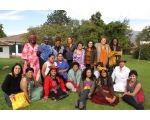
Bridging racial barriers with words
Black, indigenous and mestiza women writers from across Latin America gather at an MDG-F-supported symposium to give a voice to "invisible" people.
The Recyclers of Orellana, safeguarding the environment and building livelihoods
The MDG-F is to helping to promote recycling and create jobs in Ecuador’s Amazon basin.
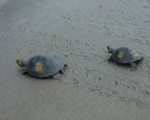
Endangered turtles find new allies in Ecuador’s Amazon basin
Once a prized local delicacy, Ecuador’s Charapas turtles are being protected through an MDG-F-financed programme to conserve the Yasuní Biosphere Reserve.
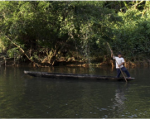
Winter Solstice and Water Culture
On December 21, 2010, the forum "Winter Solstice and Water Culture" was held in Ecuador. This event is part of the participatory construction of a sector agenda through the "Water Dialogues" a process led by the National Secretariat for Water.

The Americas
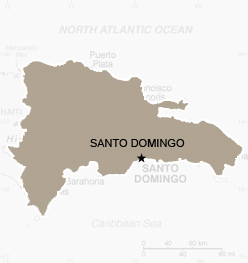
Dominican Republic
Capital Santo Domingo
Population 9.6 million
Life Expectancy 73.7
Access to clean water 95%
Adult literacy 87%
Under five mortality 25.96 per 1,000 live births
GDP per head (US$ PPP) $8,200
-
Country Fact Sheet
 This Fact Sheet summarizes the key achievements of the Joint Programmes in the Dominican Republic.
Dominican Republic Joint Programme Fact Sheet.pdf (153 KB)
Our Joint Programmes
Strengthening the banana value chain through the growth of inclusive markets Banana production is an important source both of foreign exchange for the Dominican Republic and of employment and income in the poor provinces of the Northwest and South of the country, where poverty exceeds 50 %. The Joint Programme helped to strengthen the banana value chain by installing technology and ICTs, boosting competitiveness in production and commerce, promoting decent work and developing the community’s human and social capital through use of the inclusive markets model.The Americas
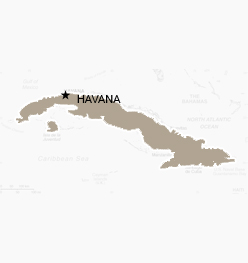
Cuba
Capital Havana
Population 11.4 million
Life Expectancy 77.45
Access to clean water 91%
Adult literacy 99.8%
Under five mortality 5.82 per 1,000 live births
GDP per head (US$ PPP) $9,500
-
Country Fact Sheet
 This Fact Sheet summarizes the key achievements of the Joint Programmes in Cuba.
Cuba Joint Programmes Fact Sheet.pdf (150 KB)
Our Joint Programmes
Support for the fight against anemia in vulnerable groups in Cuba This Joint Programme aimed to reduce the prevalence of anemia in young children and pregnant women in Cuba by assisting the government to increase the production, access to and use of foodstuffs rich in micronutrients, mainly iron. Cuba's food and nutritional surveillance systems were also targeted by the programme, which focused on the most vulnerable municipalities of the five eastern provinces and Pinar del Río. Support for new decentralization initiatives and production stimulation in Cuba In support of Cuba’s new initiatives to decentralize and stimulate national production, this Joint Programme helped to incorporate the private sector within municipal priorities as a catalyst for local development. Individual producers, cooperatives and the general population of five of the country’s municipalities were the main beneficiaries of the programme, which promoted increased private sector production, public-private cooperation and access to goods and services.IN THE NEWS
MDG-F targets infant anemia in Cuba
Joint UN programme helps open six breast-milk banks to boost infant nutrition.
STORIES
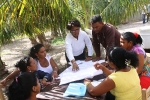
Empowering women farmers in Cuba
MDG-F-supported workshops are increasing women’s economic autonomy and boosting the island’s agricultural production.
 Facebook
 Twitter
 Youtube
 RSS
RSS