
The Americas
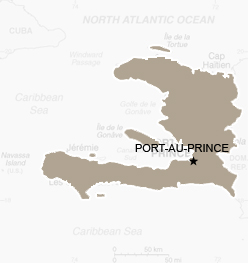
Haiti
Capital Port-au-Prince
Population 9 million
Life Expectancy 60.78
Access to clean water 58%
Adult literacy 52.9%
Under five mortality 59.69 per 1,000 live births
GDP per head (US$ PPP) $1,300
-
Country Fact Sheet
 This Fact Sheet summarizes the key achievements of the Joint Programme in Haiti.
Haiti Joint Programme Fact Sheet.pdf (174 KB)
Our Joint Programmes
Conflict Prevention and social cohesion through Local Community Empowerment and Institutional Capacity Building Haiti, the Western Hemisphere’s poorest country, already struggled with high levels of youth unemployment and violence before the 2010 earthquake, in which more than 200,000 people lost their lives, 1.5 million were displaced and crucial infrastructure was destroyed. The lack of work and the living conditions in temporary settlement camps created new vulnerabilities and security threats. The Joint Programme's aim was to tackle the immediate causes of conflict in 10 violence-prone communities by supporting violence-prevention strategies, including improving the employability of at-risk youth and vulnerable women.IN THE NEWS
Haitian MDG-F beneficiaries win women's entrepreneur prize
Initiative builds women's business skills and highlights their role in Haiti's economy and reconstruction.

Haitian teachers trained to tackle school violence
MDG-F-backed workshop teaches conflict resolution to ease violence in and out of class.
MDG-F tackling violence in Haiti's classrooms
UN programme supports workshops to develop a national training manual on reducing school-based violence.

STORIES
Bringing jobs and dignity to youth with disabilities
The MDG-Fund is helping to reduce violence in Haiti by creating income-generating activities for young people.
Reducing violence against women in Haiti
Every week, this women’s organization sees 5 cases of physical and sexual assaults on women. The MDG-F is working on many fronts to reduce conflict in Haiti and to increase services for victims of gender-based violence.
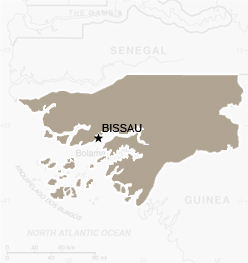
Guinea-Bissau
Capital Bissau
Population 1.5 million
Life Expectancy 47.9
Access to clean water 57%
Adult literacy 42.4%
Under five mortality 99.82 per 1,000 live births
GDP per head (US$ PPP) $600
-
Country Fact Sheet
 This Fact Sheet summarizes the key achievements of the Joint Programmes in Guinea-Bissau.
Guinea-Bissau Joint Programmes Fact Sheet .pdf (170 KB)
Our Joint Programmes
Promotion of a multi-level approach to child malnutrition Although Guinea-Bissau has made progress in reducing its child mortality rate, one in 7 children still die before reaching the age of 5 and more than a quarter of all children under 5 are stunted. The UN Joint Programme “Promotion of a multi-level approach to child malnutrition” aimed at reducing child malnutrition and mortality by improving the country's capacity to monitor and treat malnutrition and by promoting better nutrition and food practices. Strengthening Justice and Security Sector Reform in Guinea Bissau Guinea-Bissau is one of the poorest countries in the world. Civil war, multiple coups and assassinations and protracted unrest have created profound political instability and extremely fragile institutions. The aim of the Joint Programme was to strengthen Guinea-Bissau's justice system and improve access to justice, particularly for women and the poor. It sought to foster national ownership, promote stability, improve the rule of law and public security and help reintegrate ex-combatants.STORIES
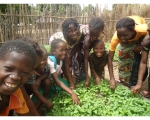
Reading, writing and tilling the soil
Across Guinea Bissau, students like these are improving their nutrition by cultivating school gardens - and then teaching their families and communities to have healthier diets.
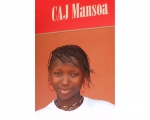
MDG-F justice programme helps Guinea-Bissau girl avoid child marriage
In a country with a poorly-functioning justice system, new Access to Justice Centers are providing legal counsel, mediation and rights awareness training to thousands of people, particularly women and the poor.
The Americas
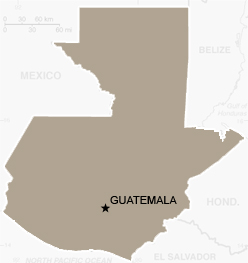
Guatemala
Capital Guatemala City
Population 13.2 million
Life Expectancy 70.29
Access to clean water 96%
Adult literacy 69.1%
Under five mortality 27.84 per 1,000 live births
GDP per head (US$ PPP) $5,300
-
Country Fact Sheet
 This Fact Sheet summarizes the key achievements of the Joint Programmes in Guatemala.
Guatemala Joint Programmes Fact Sheet.pdf (211 KB)
Our Joint Programmes
Capacity-Building amongst the Mam People in Water and Sanitation Economic Governance More than 40 percent of Guatemala’s rural dwellers do not have access to water in their homes, and even those who do often lack the most basic sanitation. The Joint Programme's goal was to promote an integrated water management system that will help guarantee wider provision of, and access to, water and sanitation in urban and rural areas of the Mam region of Guatemala. It focused on strengthening local government and on increasing the role and contribution of Mam communities in the design and implementation of public initiatives through improved dialogue. Alliances to improve the situation of Children, Food security and Nutrition Guatemala has the highest prevalence of stunting of children under 5 in Latin America, ranking fourth worldwide, and its national undernutrition rate is the highest in Latin America. The Joint Programme's aim was to improve nutrition among rural and indigenous communities by improving the production of foods by households for their own consumption and for sale, improving feeding behaviours, promoting healthy environments and contributing to gender equity. Strengthening Environmental Governance in the face of Climate Risks in Guatemala Guatemala is one of the countries most exposed to meteorological and tectonic phenomena as well as to the effects of climate change. While environmental protection and the responsible use of natural resources are strategic objectives of the government, the environmental agenda has grown faster than the capacities of public institutions. The purpose of the Joint Programme was to develop environmental governance mechanisms to strengthen the capacity for adaptation to climate change in Guatemala, especially for the most vulnerable and poorest of the population. Strengthening the institutional environment for the advancement of women in Guatemala This Joint Programme's aim was to assist and strengthen the Presidential Secretariat for Women and the Office for the Defense of Indigenous Women in their efforts to institutionalise the “National Policy for the Advancement and Development of Guatemalan Women” and its corresponding Implementation Plan (2008-2011). Consolidating Peace in Guatemala through Violence Prevention and Conflict Management After 36 years of civil war, new dynamics of violence have emerged in Guatemala which seriously threaten the country’s socio-political stability and affect human development and the achievement of the MDGs. Since 1999, the country’s murder rate has increased by 12% annually, and this has made it difficult for Guatemala to fulfill the Peace Agreements. The Joint Programme's aim was to consolidate peace by strengthening legal frameworks, public policies and initiatives in the field of prevention of conflict and violence, as well as the capacities of State institutions and civil society.STORIES
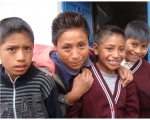
Combating child malnutrition in Guatemala
The MDG-F is working on many fronts to combat stunting that affects three out of four children, the highest rate in Latin America.
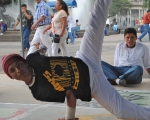
Building peace through art in Guatemala
MDG-F-supported programmes use music, theater and dance to draw youth away from the lure of gangs and violence.
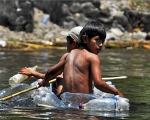
Guatemalan village takes water problem into its own hands
Midnight treks for water are replaced by household taps and a village-run water management project supported by the MDG-F.
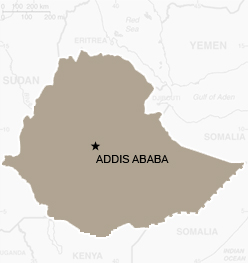
Ethiopia
Capital Addis Ababa
Population 85.23 million
Life Expectancy 55.41
Access to clean water 42%
Adult literacy 42.7%
Under five mortality 80.8 per 1,000 live births
GDP per head (US$ PPP) $800
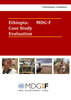 This evaluation is a knowledge-generating exercise whose goal is to: 1) Assess the MDG-F's contribution, at national level, to the achievement of the MDGs, the principles of the Paris Declaration and the UN reform initiative to “Deliver as One”; 2) Identify best practices and lessons learned in order to inform future joint programming for development; and 3) Connect local level programme interventions with national level policy-making processes by highlighting successful pilot initiatives with the potential for replication and scale-up.
Ethiopia_Country Final Evaluation.pdf (1.63 MB)-
Country Fact Sheet
 This Fact Sheet summarizes the key achievements of the Joint Programmes in Ethiopia.
Ethiopia Joint Programmes Fact Sheet.pdf (192 KB)
MDG-F Case Study Evaluation
Our Joint Programmes
National Nutrition Programme / MDG-F Joint Programme While Ethiopia has experienced impressive economic growth and a dramatic drop in the poverty rate, a significant number of children under five are still underweight or stunted. This Joint Programme worked with the government to improve the treatment of malnutrition and the care and feeding practices of children and mothers, upgrade the production of complementary food, and strengthen information and monitoring systems. In MDG-F project areas, the prevalence of underweight children fell from 50% to 9% in three years. Enabling pastoral communities to adapt to climate change and restoring rangeland environments Ethiopian pastoralists constitute 14% of the total population and have among the highest rates of poverty and the lowest human development indices. Because their income is so dependent on livestock, they are particularly vulnerable to the impacts of climate change on the region,which will include increased poverty, water scarcity and food insecurity. This Joint Programme worked with 32,000 pastoralists in some of Ethiopia's most geographically isolated, vulnerable and impoverished areas to better adapt to climate variability and change. Leave No Woman Behind Joint Programme Women in the Ethiopian region of Tigray have a tough life, with limited access to financial, medical, educational and social support systems. Many women suffer as a result of harmful traditional practices such as female genital mutilation, child marriage and abduction. The Joint Programme “Leave No Woman Behind” was created to empower women and girls through health and business education, literacy training and better access to loans and reproductive services. Edible Oil Value Chain Enhancement Ethiopia has huge potential for scaling up its production of edible oil: favorable agro-climatic conditions for increased oilseed cultivation, the labor-intensive nature of the sub-sector, a conducive business environment, the willingness of oilseed crushers to work at full capacity and the huge local demand. The Joint Programme piloted a model to increase the productivity and competitiveness of oilseed producers, boost the capacity for processing edible oil seeds and improve access to local and international markets. Harnessing Diversity for Sustainable Development and Social Change Ethiopia is an ancient country with a remarkably rich linguistic and cultural diversity. This diversity includes tangible and intangible heritage, with both traditional and modern cultural expressions, languages and centuries-old know-how in handicraft production. However, poverty, environmental degradation and climate change endanger the country's cultural riches. The Joint Programme's aim was to contribute to the sustainable development of Ethiopia by promoting its cultural heritage and diversity, developing the creative industries and encouraging dialogue about environmental preservation among the country's diverse communities.STORIES
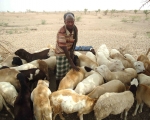
Coping with environmental change in Ethiopia
An MDG-F programme steers pastoral communities towards better rangeland management in the face of climate swings.
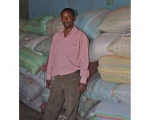
Uniting Ethiopia’s oilseed producers
An MDG-F-supported initiative fights poverty by helping to revitalize one of the country’s major agricultural sectors.
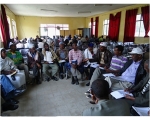
Building interfaith bridges in Ethiopia
Dialogue forums organized by the MDG-Fund are helping bring together Ethiopia’s religious and cultural communities.
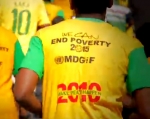
Haile Gebreselassie kicks off the Great Ethiopian Run under the slogan “We Can End Poverty by 2015”
Thirty-five thousand people took to the streets in Addis Ababa on 21 November to participate in the biggest road race on the African continent, the Great Ethiopian Run.

 Facebook
 Twitter
 Youtube
 RSS
RSS