
Eastern Europe
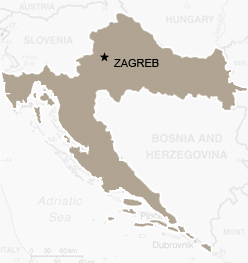
Croatia
Capital Zagreb
Population 3.6 million
Life Expectancy 77.96
Access to clean water 97%
Adult literacy 98.7%
Under five mortality 18.62 per 1,000 live births
GDP per head (US$ PPP) $6,000
-
Country Fact Sheet
 This Fact Sheet summarizes the key achievements of the Joint Programmes in Croatia.
Croatia Joint Programme Fact Sheet.pdf (124 KB)
Our Joint Programmes
Closing the Chapter: Social Inclusion and Conflict Transformation in War-Affected Areas of Croatia More than 20 years after Croatia's war of independence, many communities there still suffer the social exclusion and economic deprivation characteristic of war-affected areas. This Joint Programme pioneered a model for socio-economic recovery that integrated community decision-making through projects based on shared needs and interests. This introduced peace building into existing local structures that provide social services, education, community policing, justice and job creation.STORIES
.gallery_front.JPG)
Increase of self-employment opportunities for women
The Hrvatska Dubica Women Association gathers some 30 women from different ethic groups in the war-affected town of Hrvatska Dubica in continental Croatia. The town was heavily affected by the war in the early nineties and is now on a slow path of recovery. Security issues and inter-ethnic conflicts are a thing of the past for Dubica’s inhabitants, but a full economic recovery is still far from completion.

Teachers and children against violence
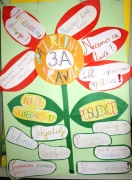
The Elementary School “Brace Ribar”, the largest elementary school in Sisak, is one of 280 schools that joined a MDG-F-supported project “Protecting children from violence” in Croatia. The school has joined the mentor based system of education of teachers and other school employees on the prevention, recognition and reaction to peer violence in late 2009. The school is currently implementing violence prevention and conflict resolution standards that are very visible, not only in classrooms and corridors of the school building, but also among the staff and students.
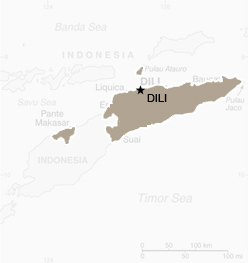
Timor-Leste
Capital Dili
Population 1.1 million
Life Expectancy 67.27
Access to clean water 62%
Adult literacy 58.6%
Under five mortality 40.65 per 1,000 live births
GDP per head (US$ PPP) $2,300
 This evaluation is a knowledge-generating exercise whose goal is to: 1) Assess the MDG-F's contribution, at national level, to the achievement of the MDGs, the principles of the Paris Declaration and the UN reform initiative to “Deliver as One”; 2) Identify best practices and lessons learned in order to inform future joint programming for development; and 3) Connect local level programme interventions with national level policy-making processes by highlighting successful pilot initiatives with the potential for replication and scale-up.
Timor Leste_Country Final Evaluation.pdf (1.45 MB)-
Country Fact Sheet
 This Fact Sheet summarizes the key achievements of the Joint Programmes in Timor-Leste.
Timor-Leste Joint Programmes Fact Sheet.pdf (144 KB)
MDG-F Case Study Evaluation
Our Joint Programmes
Promoting Sustainable Food and Nutrition Security in Timor-Leste Timor-Leste, one of the world's newest countries, also has among the world's highest rates of undernourishment and child and maternal mortality. Nearly half of all children under five suffered from malnutrition, with rates on the rise, when the Joint Programme was launched in 2009. The programme's aim was to improve the health and nutritional status of pregnant and lactating women and under-five children by improving institutional capacity and increasing access to sufficient, safe and nutritious food. Supporting Gender Equality and Women’s Rights in Timor-Leste Despite the constraints of being newly independent and one of the poorest countries in the world, Timor Leste has joined the global effort to achieve the Millennium Development Goals, including the goal of promoting gender equality and empowering women. The Joint Programme supported government efforts to protect women from violence and economic hardship and ensure their equal access to justice by assisting in the formulation of legislation and gender-sensitive budgeting, building capacity to prevent human trafficking, and improving services for victims of violence.STORIES
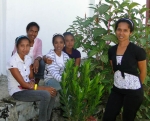
Protecting Timor Leste’s women
Three quarters of married women in the Pacific nation of Timor Leste have suffered physical or sexual assaults at the hands of their husbands or partners. The MDG-F has supported the passage of a national law against domestic violence and is assisting in the fight against all forms of gender-based violence.
The Americas
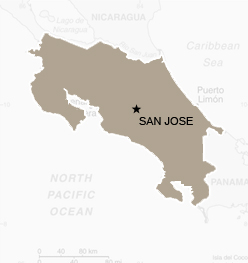
Costa Rica
Capital San José
Population 4.2 million
Life Expectancy 77.58
Access to clean water 98%
Adult literacy 94.9%
Under five mortality 8.7 per 1,000 live births
GDP per head (US$ PPP) $11,500
-
Country Fact Sheet
 This Fact Sheet summarizes the key achievements of the Joint Programmes in Bolivia.
Costa Rica Joint Programmes Fact Sheet.pdf (188 KB)
Our Joint Programmes
Joint Programme on Youth, Employment and Migration: A One-Stop Shop for Youth Employment Though Costa Rica's youth have a high level of literacy and education, they suffer from high levels of unemployment. This Joint Programme increased access to decent jobs by improving the employability and entrepreneurialism of young people between the ages of 15 and 24, especially female, rural and migrant youth, and those in vulnerable situations. Intercultural Policies for social inclusion and generation of opportunities The Joint Programme promoted the cultural and social inclusion of marginalised groups and the potential of the creative sector in Costa Rica. It took as a starting point the Parque de la Libertad (Liberty Park), a space for artistic, ecological and cultural-production related projects, which serves 15 marginalized districts in the country’s largest built-up urban area, comprising 700,000 inhabitants. Networks for coexistence, communities without fear The security situation in Costa Rica has worsened in recent years due to drug trafficking and common crime. Though still below other countries in Central and South America, the level of violence has begun to impact the country's social fabric. This Joint programme aimed at improving security in nine of Costa Rica's least safe cantons by simultaneously reducing levels of fear and violence. Developing Competitiveness for the Brunca region in the Tourism and Agro-Industry Sectors, with an Emphasis on the Creation of decent, green employment to Reduce Poverty The Brunca Region is one of the most isolated and poorest in Costa Rica, but it also contains the most biodiversity and natural resources. The Joint Programme worked in the tourism and agro-industry sectors to boost competitiveness in the region, with a particular emphasis on the creation of green and decent jobs.IN THE NEWS
Digital production center for Costa Rican youth opens with MDG-F backing
The Center for Technology and Arts will train 60 at-risk youth in 3D animation and production at San Jose's Parque la Libertad cultural center.
The Americas
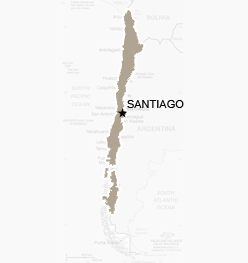
Chile
Capital Santiago
Population 16.6 million
Life Expectancy 77.34
Access to clean water 95%
Adult literacy 95.7%
Under five mortality 7.71 per 1,000 live births
GDP per head (US$ PPP) $14,900
-
Country Fact Sheet
 This Fact Sheet summarizes the key achievements of the Joint Programmes in Chile.
Chile Joint Programme Fact Sheet.pdf (138 KB)
 Facebook
 Twitter
 Youtube
 RSS
RSS